 Alan Schwegler
Turning “what should we build?” into a plan the room agreed on.
Brady's healthcare-printing team had no shortage of ideas — and no shared way to rank them. I designed and facilitated a cross-functional workshop that put engineering, product, and design around one board, mapped the competitive field, and forced every idea through a single benefit-vs-effort lens. We left with a prioritized plan for what would actually help us win.
The work at a glance.
- The problem
- Brady’s healthcare-printing team had competing ideas without a shared way to prioritize them.
- My responsibility
- Designed and facilitated the cross-functional workshop as a Sr. UX Designer.
- The key decision
- Compare opportunities against a common benefit-versus-effort framework, informed by the competitive landscape.
- The outcome
- Delivered a prioritized direction for the healthcare printer portfolio, providing context for the subsequent Lioness service-design work.
One question, one shared board.
The team knew healthcare printing was a crowded market — Zebra, TSC, Citizen, Honeywell and more — and that Brady, through PDC, had real equity in wristbands. What it lacked was alignment: engineering, product, and design each carried a mental list of what mattered, with no common way to compare them.
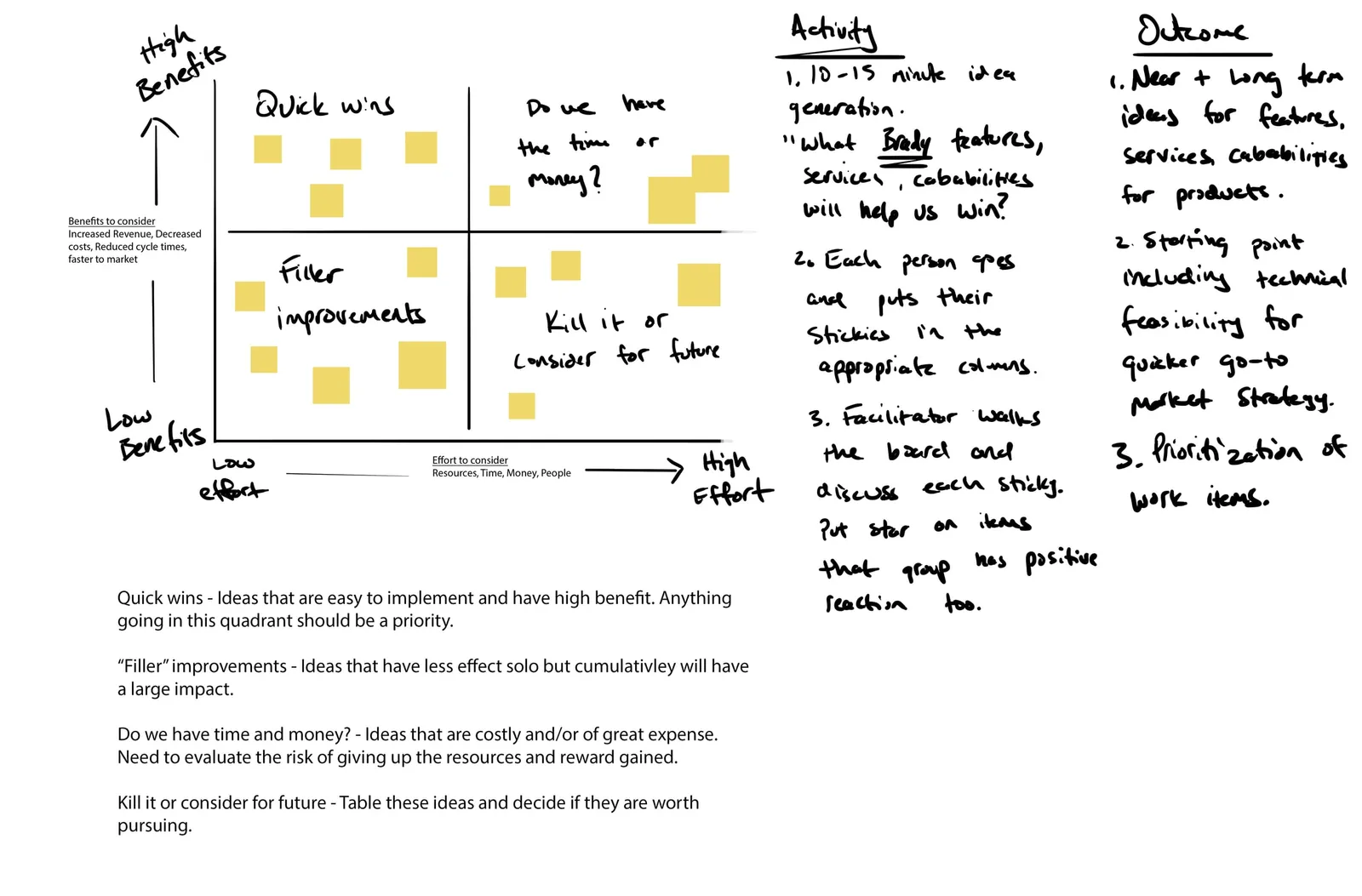
I designed the workshop around a single question — “What features, services, and capabilities will help us win?” — and a single board everyone would answer it on. The goal wasn’t more ideas; it was a shared, defensible way to rank the ones we already had.
The hard part of strategy isn’t generating ideas — it’s getting a room to agree on which ones to kill.
On facilitation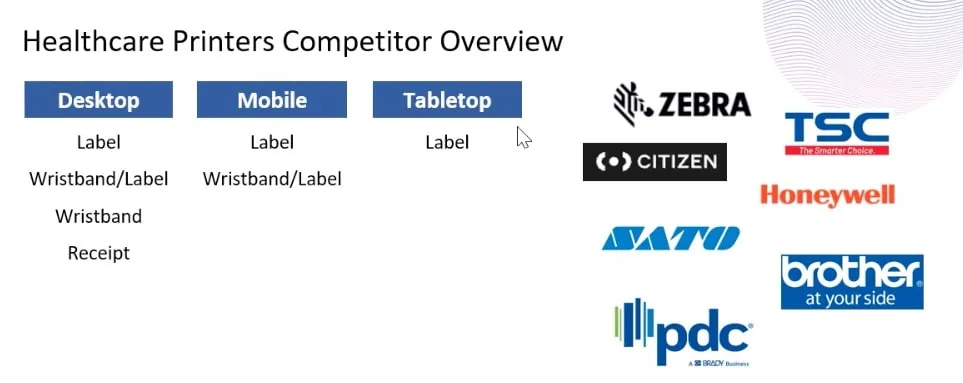
How the workshop worked.
Generate, fast
Ten to fifteen minutes, one prompt: what will help us win? Everyone wrote ideas on stickies in parallel — no debate yet. Volume first, judgment later.
Place it on the board
Each person placed their stickies on a benefit-vs-effort matrix: quick wins, filler improvements, big bets, and “kill it or table it.” Suddenly every idea had a position, not just a champion.
Walk it, star it, align
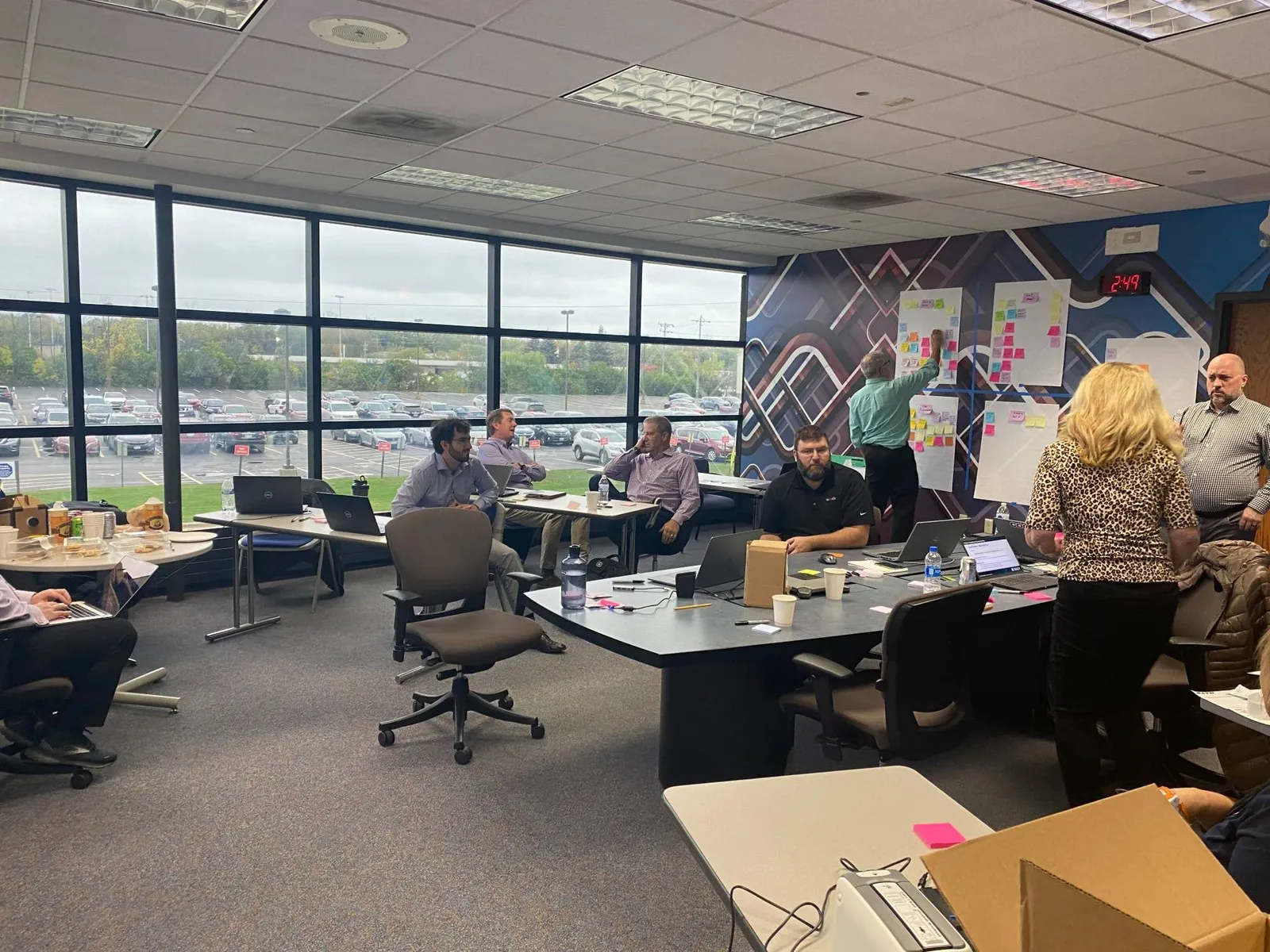
As facilitator I walked the board sticky by sticky. We discussed each one and starred the ideas the group reacted to. By the end the prioritization belonged to the room — not to any one person.
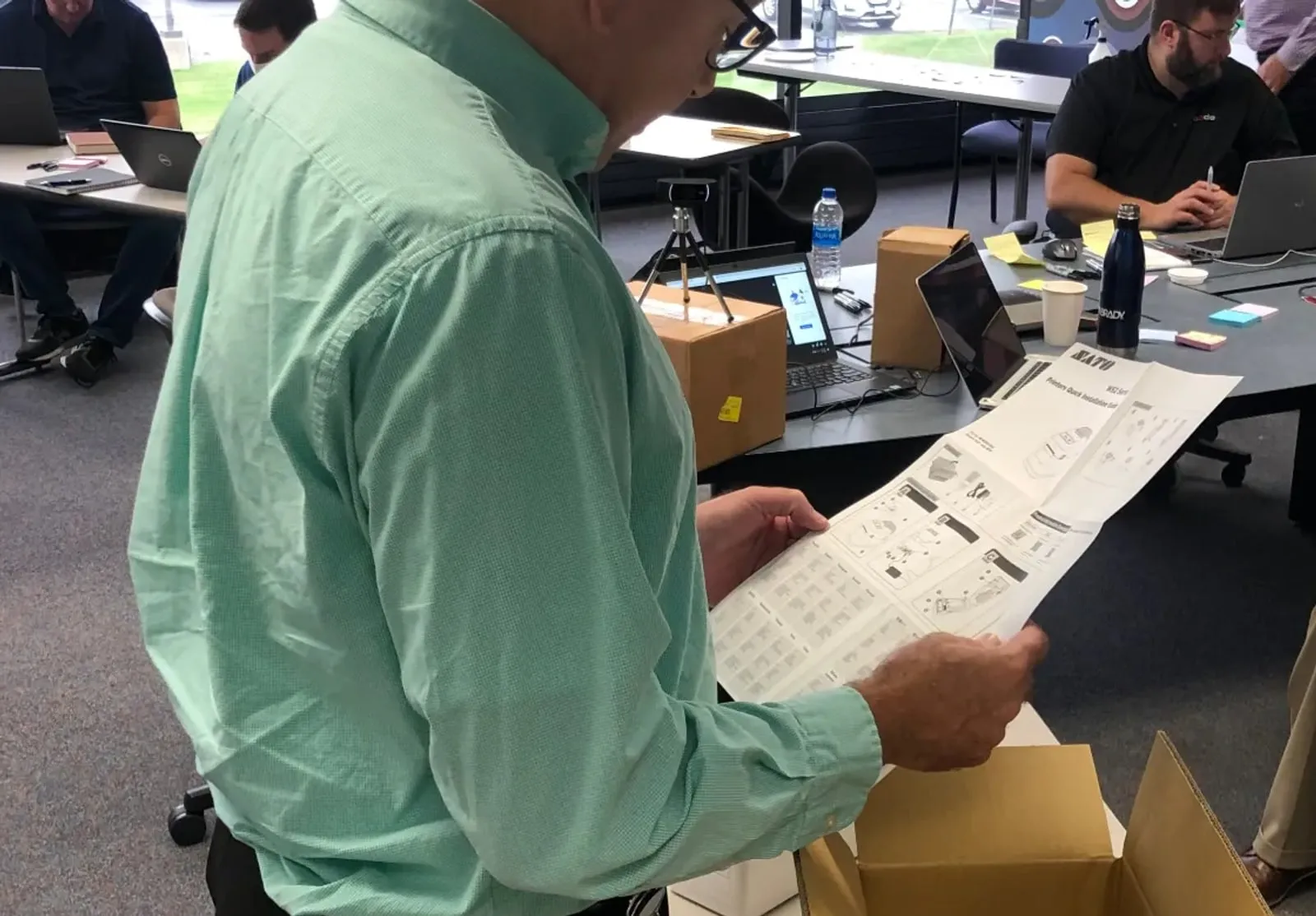
Supporting artifacts: The cross-functional healthcare printing workshop
It set the line-card for a printer fleet.
The workshop produced a ranked view of near- and long-term bets for Brady’s healthcare-printing line — but its real output was strategic: the line-card for PDC by Brady’s healthcare printer fleet, the product-line roadmap the Certis printer family was built from.
That two-day session set a direction that shaped years of hardware — including the Certis C1-30 Thermal Patient ID Printer, whose service design and mobile control I went on to lead.
Benefit-vs-effort 2×2
Idea generation → prioritization
Healthcare printing
Wristbands & labels
PDC-by-Brady fleet line-card
Fleet line-card
Ranked feature roadmap
Go-to-market input
Give people a shared board and a shared question, and alignment stops being a meeting and starts being a picture.
— Alan Schwegler · Facilitator, Brady PXBrady — Product Experience
Product Experience (PX) team
Alan Schwegler — Workshop design & facilitation
Hosts & the cross-functional room
Steve Grobschmidt & Jana Buchanan — Workshop hosts
Product management · engineering · design